Understanding Your Cycle: Cramps, Hormones, and Mood Swings

For many girls and women, the menstrual cycle can feel confusing, uncomfortable, and sometimes even overwhelming. Yet the changes happening in the body during this time are completely natural. Understanding what causes period symptoms—and how to manage them—can make the cycle much easier to navigate.
Why Do Menstrual Cramps Happen?
Menstrual cramps, also known as dysmenorrhea, occur when the uterus contracts to shed its lining during menstruation. These contractions are triggered by hormone-like substances called prostaglandins. Higher levels of prostaglandins cause stronger uterine contractions, which can lead to pain in the lower abdomen, lower back, or thighs.
For most girls, cramps begin shortly before or during the first days of their period and gradually decrease as the cycle continues. While mild to moderate cramps are common, very severe pain may sometimes indicate other conditions, such as endometriosis or hormonal imbalance, and should be discussed with a healthcare professional.
Ways to relieve menstrual cramps:
Apply heat. A heating pad or warm water bottle on the lower abdomen helps relax uterine muscles and improve blood flow.
Stay physically active. Gentle movement such as walking, stretching, or yoga can reduce pain by improving circulation and releasing endorphins.
Drink warm fluids. Herbal teas or warm water can help relax muscles and reduce discomfort.
Prioritize rest and sleep. Fatigue can make pain feel more intense.
Maintain balanced nutrition. Foods rich in magnesium, iron, and vitamins can support the body during menstruation.
Everyone’s body is different, so finding what works best may take time.
How Hormones Change During the Menstrual Cycle
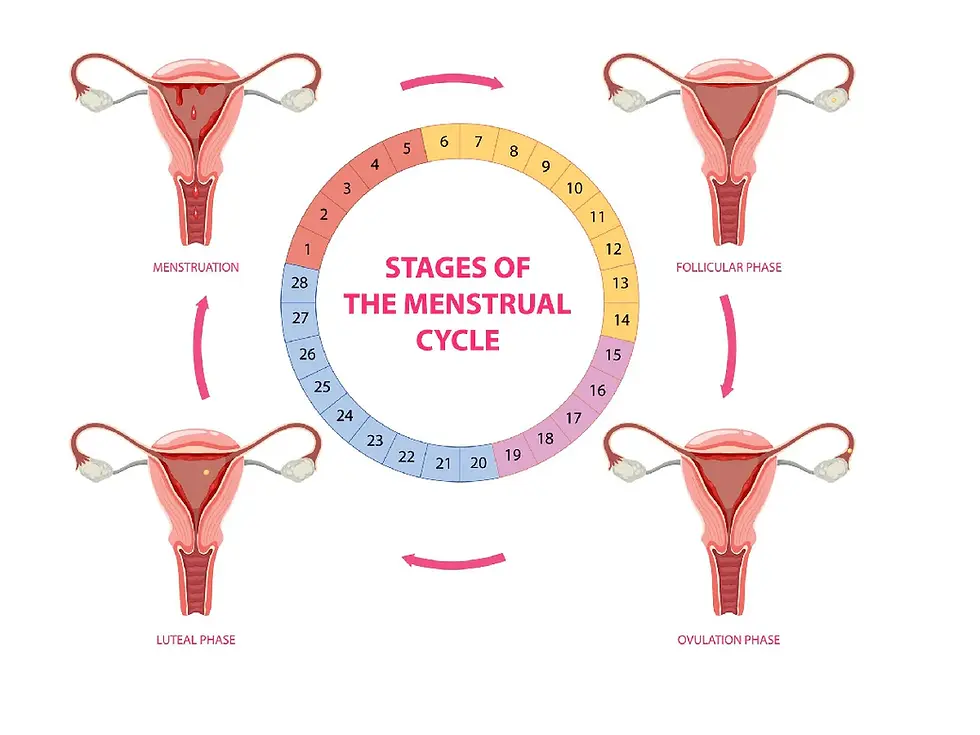
A typical menstrual cycle lasts around 28 days, although cycles between 21 and 35 days are also considered normal. Throughout this time, hormone levels fluctuate, which affects both physical and emotional well-being.
The cycle can be divided into four main phases:
1. Menstrual phase (Days 1–5)This is when the uterine lining is shed and menstruation occurs. Levels of estrogen and progesterone are low, which can lead to lower energy levels, fatigue, or irritability.
2. Follicular phase (Days 1–13)While menstruation is ending, estrogen levels begin to rise. This hormone stimulates the growth of follicles in the ovaries and prepares the body for ovulation. Many people feel gradually more energetic and focused during this phase.
3. Ovulation (Around Day 14)A mature egg is released from the ovary. Estrogen peaks around this time, and some people feel more confident, social, or motivated.
4. Luteal phase (Days 15–28)Progesterone becomes the dominant hormone as the body prepares for a possible pregnancy. If pregnancy does not occur, hormone levels drop toward the end of this phase. This hormonal shift can lead to symptoms commonly associated with premenstrual syndrome (PMS), including mood swings, bloating, fatigue, or increased sensitivity.
These hormonal fluctuations are one reason why emotions may feel stronger at certain times of the cycle. Mood changes are not “overreactions”; they are often a natural response to changing hormone levels.
Learning to Work With Your Cycle
Instead of seeing the menstrual cycle only as something inconvenient, many people find it helpful to understand and track their body’s patterns. Tracking symptoms such as cramps, mood changes, or energy levels can help identify what is typical for your body and when you might need extra rest or support.
Most importantly, periods and reproductive health should not be topics surrounded by shame or silence. Open conversations, accurate information, and access to supportive resources allow girls and women to take better care of their health and well-being.
Understanding your cycle is not just about managing discomfort—it is about learning how your body works and feeling confident in that knowledge.
Комментарии